Plant Physiology started the Assistant Features Editor (AFE) program 8 years ago to help disseminate discoveries published in the journal and to train the next generation of editors and reviewers. Our AFEs are promising early-career scientists. They bring their passion for science to our journal, communicating to our readers each month some of the most exciting advances in research. Collectively, they have published more than 100 News and Views articles in 2025, highlighting some of the most exciting papers published in our journal. They are guided and mentored by our team of AFE editors, Michael Blatt, Judy Brusslan, Mary Williams, and Yunde Zhao.
However, the two-year program is designed to rotate off some AFEs and to add new members at the beginning of each year, and now is the time to say Thank You to those rotating off, and Welcome to our new cohort.
Thank You to the Assistant Features Editors whose terms are finishing
Fifteen of our AFEs who started in 2024 will be stepping down from the editorial board at the end of 2025, and we would like to take this opportunity to thank them all for their contributions. It has been a huge pleasure to get to know you over these past two years. We thank you for your service to Plant Physiology and wish you success and happiness as you move forward with your careers. Thank you so much, Burcu Alptekin, Kumari Billakurthi (mid-2026), Pablo I. Calzadilla, Erin Cullen, Prateek Jain, Alicja Kunkowska, Maneesh Lingwan, Anna Moseler, Sara Selma Garcia, Ritu Singh, Chong Teng, Héctor H. Torres-Martínez, Thu Tran, Nicola Trozzi, and Munkhtsetseg Tsednee.
And now we have the pleasure to introduce the new Assistant Features Editors who are joining the editorial board in 2026. Welcome 2026-2027 cohort!
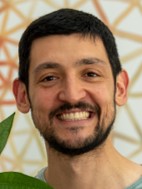 Matheus-Enrique Bianconi is an evolutionary biologist at the Université de Toulouse interested in the origins of plant adaptations. He combines genomic and experimental approaches to identify genetic changes underlying plant traits, and tracks their evolutionary history using comparative analyses. He has worked on the evolution of C4 photosynthesis, and is currently studying the evolutionary consequences of the loss of symbiosis in some land plant lineages.
 Yuzhen Fan is a postdoctoral fellow at The Australian National University. Her research focuses on advancing the mechanistic understanding of respiration and photosynthesis in C4 plants, with the goal of improving the parameterization of C4 models at both leaf and global scales. Yuzhen completed her undergraduate, honors and PhD degrees at The Australian National University, and has since spearheaded multiple nationally funded projects.
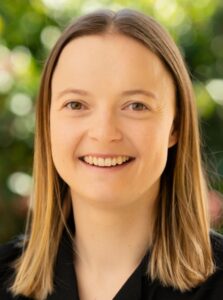 Alison Gill is a Postdoctoral Research Fellow in the ARC Centre of Excellence in Plants for Space at Adelaide University. She is passionate about plant physiological responses to abiotic stress and optimizing photosynthesis for future climates and controlled environments. She is currently part of the Lunar Effects on Agricultural Flora (LEAF) Artemis III deployed instrument team, working with NASA and US collaborators to grow plants on the lunar surface.
 Eva María Gómez Álvarez is a plant biotechnologist who graduated with honors and completed an ERASMUS+ internship at the University of Oxford. She earned an international PhD in Agrobiodiversity at the PlantLab (Scuola Superiore Sant’Anna, Pisa, Italy) in 2023, focusing on barley germination after submergence. She received the 2023 award for Best Publication on Plant Breeding from the Italian Association of Agrarian Genetics. She worked as a post-doc for more than 2 years in the PlantLab. In March 2026, she will join the laboratory of Javier Agustí at the IBMCP in Valencia (Spain). Outside research, she enjoys running, travelling, and reading.
 Alyssa Kearly is a molecular biologist with an interest in functional genomics and RNA biology, currently serving as an NSF PGRP Fellow in Andrew Nelson’s lab at the Boyce Thompson Institute. She combines computational and molecular approaches to investigate the potential mis-annotation of long non-coding RNAs with short ORFs and to characterize their encoded peptides.
 Praveen Khatri is a postdoctoral fellow at the University of Toronto Mississauga (UTM), working with Michael Phillips. His research centers on plant specialized metabolism, with a particular focus on terpenoid biosynthesis and the regulatory logic underlying the production of bioactive natural products. He received his PhD at Agriculture and Agri-Food Canada/Western University under the supervision of Sangeeta Dhaubhadel, where he investigated cytochrome P450 enzymes involved in glyceollin biosynthesis and developed a genome-wide P450 atlas for soybean. His work aims to illuminate how plants assemble complex metabolites and how these pathways can be leveraged for metabolic engineering, plant defense enhancement, and potential agricultural or biomedical applications.
 Rose McNelly is a postdoctoral researcher at the John Innes Centre where she is studying starch granule formation in wheat and its wild relatives employing techniques from biochemistry, bioinformatics and genetics. Alongside her research, Rose enjoys science communication having organized outreach stands for science festivals, written blog articles and she was an ASPB Plantae fellow in 2023.
 Arijit Mukherjee completed his PhD from the National University of Singapore in December 2024 and is presently a postdoctoral researcher in Jeffrey Dangl’s lab at the University of North Carolina at Chapel Hill. His doctoral research focused on understanding how plant sulfur nutrition is coordinated in the presence of diverse microorganisms. In his postdoctoral research, he is exploring the crosstalk between plant immune system and commensal bacteria.
 Lisa Oskam received her training at the University of Amsterdam, where she did her Bachelor and Masters in biology. She continued her training at Utrecht University, where she received her PhD training in the photobiology group led by Ronald Pierik. She is currently working as a postdoctoral researcher at Wageningen University, studying developmental plasticity in response to light quality.
 Jessy Silva is a research associate in the group of Sílvia Coimbra at the University of Porto, Portugal. Her research focuses on the molecular mechanisms of plant reproduction, particularly the role of arabinogalactan proteins (AGPs). She completed her PhD at the University of Minho, Portugal, with Manuela Costa, supported by a Doctoral INPhINIT fellowship from “la Caixa” Foundation, where she investigated the importance of AGP glycosylation in plant reproduction.
 Deeksha Singh is a plant developmental biologist whose research spans molecular signalling, organelle biology, and nutrient-responsive transcriptional networks. She completed her PhD at IISER Bhopal, where she studied light–ABA crosstalk in Arabidopsis. During her first postdoc at University of California, Riverside, she focused on anterograde signalling pathways and chloroplast biogenesis. Currently a postdoc at UC Davis, her work integrates biochemical, genetic, and computational approaches to define the transcriptional networks governing nitrogen assimilation in tomato, with a particular emphasis on single-cell regulatory dynamics and their impacts on root physiology.
 Hannah Rae Thomas is a 100 Talents Young Professor at Zhejiang University (浙江大学) in Hangzhou, China. She graduated with a PhD in plant biology from Cornell University, where she studied graft compatibility with Margaret Frank. As a postdoctoral researcher at the John Innes Centre, she worked with Christine Faulkner to explore the role of symplastic and apoplastic signaling during plant stress. She is now part of a research team in the Department of Horticulture in the Institute of Vegetable Science where she works with other group leaders to investigate the effects of biotic and abiotic stress on tomato. Her specific research interests include vascular-cambial patterning, graft formation, and graft transmissible traits.

William Thomas is a Postdoctoral Research Fellow at the University of Western Australia (UWA). His research focuses on the identification of disease resistance genes and understanding their evolutionary dynamics in Brassica crops. He completed his PhD at UWA which was supported by the Australian Grains Research and Development Corporation.
 Benjamin Tremblay is a post-doctoral scientist at The Sainsbury Laboratory (Norwich, UK), studying the cis-regulatory elements necessary for the activation of spatially distinct and cell type-specific immune responses during pathogen infection. He is primarily interested in understanding genome regulation of plants during development and in response to environmental stresses.
 Mireia Uranga Ruiz de Eguino carried out her PhD in Biotechnology at the Instituto de Biología Molecular y Celular de Plantas (IBMCP, Spain), where she engineered viral vectors for CRISPR-Cas mediated genome editing in solanaceous crops working with José Antonio Daròs. She completed postdoctoral positions in Belgium (VIB-UGent Center for Plant Systems Biology and KU Leuven as a MSCA fellow) and Spain (Center for Research in Agricultural Genomics, CRAG), where she expanded her expertise in plant virology and CRISPR-Cas systems. Currently, she is a Juan de la Cierva postdoctoral fellow at the Institute for Integrative Systems Biology (I2SysBio, Spain). As a member of the TOMS BioLab, she studies the transcriptional regulation of glandular trichome development in cannabis and the biotechnological applications of cannabinoid production.
A heartfelt thanks to the outgoing Assistant Features Editors for their outstanding contributions to *Plant Physiology*, sharing knowledge and shaping the next generation of scientific communicators. Warmest welcome to the new 2026 cohort—excited to see your passion and insights continue to illuminate the field!
Please I would like to apply for that position
Can you please share with me the link for 2026-2027