Plant Physiology Webinar: Focus on Metabolism
Celebrating the 2026 Focus Collection on Plant Metabolism
Recorded May 19, 2026
About This Webinar
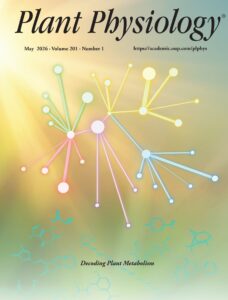 Plants employ diverse metabolic pathways to produce large numbers of metabolites, not only critical to plant growth, development, and defense, but also important to humans as foods, medicines, and raw materials. Recent advances in genetics, synthetic biology, omics, and AI enable us to unravel the intricate metabolic networks and dynamic regulatory control of plant metabolism, which offer novel insights and facilitate rational manipulation of the complex metabolic processes in plants.
Recently, Plant Physiology highlighted the importance of plant metabolism through curating a Focus Collection on Metabolism. Articles in the focus collection advance our comprehensive understanding of sophisticated processes and intrinsic mechanisms underlying plant metabolism. Topics include the regulation of plant metabolism, metabolic processes and networks, metabolic responses to developmental and environmental cues, synthetic biology, metabolic engineering, metabolome analysis, metabolic diversity, and novel functions of metabolites in plant growth and development.
Focus Collection editors Alain Goossens, Li Li, Sibongile Mafu, Yang Zhang have organized a webinar to celebrate this topic. This webinar features speakers Pengda Ma, Hiroshi Maeda,and Tonni Grube Andersen, who will share findings from their work appearing in this Focus Collection. The webinar is hosted by Sibongile Mafu and moderated by Assistant Features Editor Yuzhen Fan.
SPEAKERS
Pengda Ma: Transcriptional control of secondary metabolism in Salvia miltiorrhiza with a focus on SmDof32
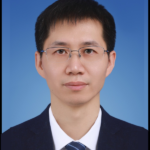 Pengda Ma is a Professor and PhD supervisor at the College of Life Sciences, Northwest A&F University. He was a visiting scholar at the John Innes Centre (UK) from 2013 to 2014 and at the University of Glasgow (UK) from 2022 to 2023. His research is dedicated to the regulation of secondary metabolism in Salvia miltiorrhiza, where he has established comprehensive regulatory networks for Jasmonic Acid (JA) and Salicylic Acid (SA) in relation to active compounds. Dr. Ma has published more than 20 papers in prestigious journals such as Molecular Plant, New Phytologist, Plant Physiology, The Plant Journal, Journal of Experimental Botany, and Horticulture Research. Pengda Ma and colleagues contributed a research article titled, “The transcription factor Dof32 coordinates salvianolic acid biosynthesis and drought tolerance in Salvia miltiorrhiza” to this focus collection.
Tonni Grube Andersen: The interplay between physical and chemical barriers in roots
 Tonni Grube Andersen is a professor at the Department of Plant and Microbial Biology at the University of Zurich. He obtained his PhD in 2012, became a Marie Curie Fellow in the group of Niko Geldner in Lausanne and subsequently an independent group leader and Alexander von Humboldt fellow at the Max Planck Institute for Plant Breeding Research in Germany before establishing his independent group in Zurich. His research focuses on how plant roots communicate with their environment at cellular resolution. In particular, his work explores how the endodermis integrates developmental programs with environmental cues to regulate nutrient uptake, barrier formation, and long-distance signaling. A central theme of his research is the role of specialized endodermal cells, known as passage cells, which he studies as dynamic and spatially restricted regulators of exchange between the plant vasculature and the surrounding soil. His group combines single-cell transcriptomics, advanced imaging, and physiological approaches to uncover how spatial organization within roots shapes plant nutrition and interactions with microbes. By bridging development, physiology, and environmental context, his work aims to reveal how plants achieve precise control over what they take up—and what they keep out. Tonni and colleagues contributed a review article titled, “Guns in rosettes: The Arabidopsis chemical weapons arsenal” to this focus collection.
Hiroshi Maeda: Re-tuning aromatic amino acid and lignin biosynthesis during grass evolution
 Hiroshi Maeda is currently a Professor at University of Wisconsin-Madison, Department of Botany and the Cell & Molecular Biology Program. He obtained his BS and MS degrees at Osaka University and PhD at Michigan State University. The Maeda laboratory brings together diverse researchers and ideas to investigate the evolutionary diversification and regulatory mechanisms of nitrogen metabolic network and biosynthesis of aromatic amino acids, essential human nutrients and precursors of numerous plant natural products. Utilizing evolutionary biochemistry and molecular genetic approaches the group has identified enzyme variants and mutations that can alter metabolic connectivity and regulation at the interface of primary and specialized metabolism in various plants. These basic discoveries are being utilized to conduct synthetic biology for sustainable production of various aromatic chemicals directly from CO2 using sunlight energy in plant hosts. Hiroshi and colleagues contributed an article titled, “Re-tuning of aromatic amino acid biosynthesis before and after the evolution of tyrosine-derived grass lignin” to this focus collection.
HOST
Sibongile Mafu, Plant Physiology Reviewing Editor
 Sibongile Mafu is an Assistant Professor of Biochemistry and Molecular Biology at the University of Massachusetts Amherst. Her research centers on terpenoid metabolism, with a focus on the biochemical and genetic mechanisms that give rise to chemical diversity in plants. Her work offers insight into how specialized metabolites shape plant defense, environmental adaptation, and ecological interactions, with relevance to sustainable agriculture and biotechnology.
MODERATOR
Yuzhen Fan, Plant Physiology Assistant Features Editor
 Yuzhen Fan is an early-career researcher specializing in C4 metabolism. She completed her PhD at the Australian National University (ANU) in 2023, focusing on respiratory metabolism in C4 plants. She then undertook a one-year postdoctoral position at ANU, where she investigated photosynthetic capacity across a diverse range of C4 species in collaboration with Danielle Way. In 2024, she returned to the lab of her PhD supervisor, Owen Atkin, to lead a nationally funded project aimed at advancing the mechanistic understanding of plant respiration and improving its representation in Earth System Models. Starting from late 2026, Yuzhen will move back to Danielle Way’s lab to lead another nationally funded project aiming to improve C4 photosynthesis parameterisation in ecosystem models. Yuzhen has done her fair share of lab-hopping, but one thing has not budged—her unwavering passion for C4 biology.
Im really excited to attend this webinar