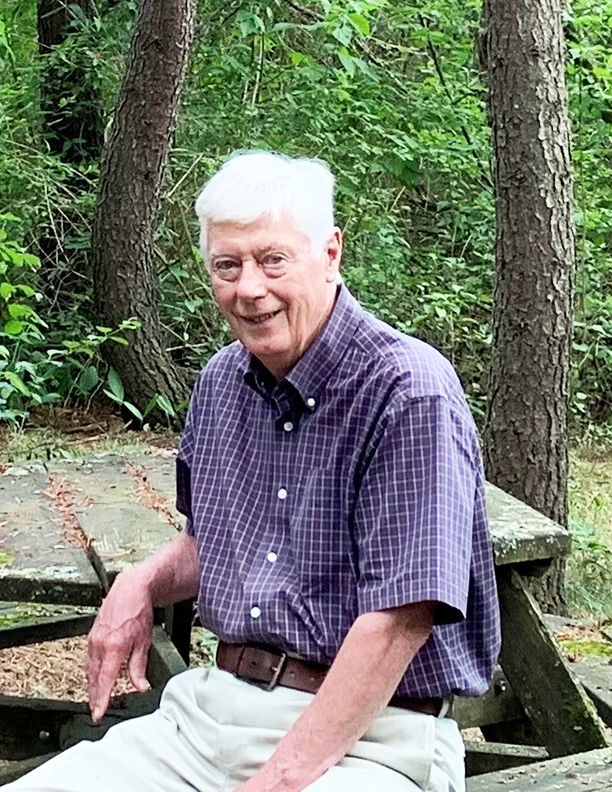
 Dr. David Thomas Dennis, Emeritus Professor of Biology at Queen’s University at Kingston, Canada, and former President and CEO of Performance Plants Inc., passed away due to complications arising from cardiac failure on Tuesday, August 19th, 2025, at Kingston General Hospital.
David was born in Preston, Lancashire, England, and was the oldest son of Thomas Richard Dennis, a cabinet maker. When David expressed an interest in attending university, his father tried to persuade him to take an apprenticeship with a local building firm instead, stating People like us don’t go to university. David ignored the paternal advice and was the first member of the Dennis family to engage in post-secondary education, gaining a First Class Honours in Botany from Leeds University. He remained at Leeds and studied for his doctoral degree with Professor R.D. Preston, investigating the structure of cellulose microfibrils from terrestrial plants and seaweeds. This resulted in a paper published in Nature. While at Leeds, David would trudge the Yorkshire Moors to attend dances at a women’s college where he met Marjory Bowmer, his wife for the next 65 years.
David’s first post-doctoral fellowship was at the National Research Council of Canada in Ottawa under the supervision of biophysicist Dr. J.R. Colvin, with whom he worked on the synthesis of cellulose by the bacterium Acetobacter xylinum. David was attracted to Canada by the tales his father had told him of working with Canadian soldiers during the Second World War, building bridges across canals in Caen as a Royal Engineer to aid the advancement of Canadian troops.
A second postdoctoral fellowship took him to UCLA where he worked with Professor Charles A. West on the synthetic pathway for gibberellic acid, elucidating the pathway from mevalonic acid to kaurenoic acid as the immediate precursor to GA. While at UCLA, David became fascinated with the work done by the pioneer of metabolic regulation, Professor Danial E. Atkinson, and his studies on the regulation of animal enzymes. After returning to England and joining Unilever Corporation as a research scientist, David applied Atkinson’s ideas and showed for the first time that plants had regulatory enzymes, such as phosphofructokinase, similar to those in animals. While studying ageing processes in plants, he discovered that the regulatory properties of PFK and NAD-dependent isocitrate dehydrogenase changed during senescence.
Returning to Canada in 1968, David took on an Associate Professorship position at Queen’s University and swiftly built an international reputation as a plant biochemist. Early work with graduate student Ron Duggleby included seminal papers on the regulatory properties of PFK, NAD-dependent isocitrate dehydrogenase and glyceraldehyde phosphate dehydrogenase. After Professor David Canvin at Queen’s demonstrated that fatty acids were synthesised in plastids in castor endosperm, David hypothesized that the source of carbon for this may require the compartmentation of glycolytic enzymes. David’s research showed this to be the case, with glycolytic isozymes occurring between the cytoplasm and plastids. Development of molecular biology techniques in the 1980s led to the characterization of genes for plastid and cytosolic isozymes, showing these to be quite distinct proteins. The uptake of proteins into plastids was also studied.
The importance of carbohydrate metabolism between plastids and cytosol is now well recognised, and David’s work in this field is considered to be his most important contribution to plant science. A conference in Edinburgh in 1990 was devoted to compartmentation in plant metabolism, during which David, as the keynote speaker, was introduced as the father of this field of research.
David resigned from Queen’s in 1996 and incorporated Performance Plants, a biotechnology company focusing on the development of plants resistant to environmental stresses such as drought and high temperature. The company expanded rapidly, with laboratories in Kingston, Saskatoon, and Syracuse employing 50 people. David was President and CEO of Performance Plants until 2006, then CEO until his retirement in 2008. The company continues to thrive in Kingston under the direction of CEO Yafan Huang, one of the many graduate students David supervised who went on to establish stellar careers in plant science.
David was known for his keen sense of fun. He had a passion for gardening, dogs, horses, good beer, better wine, and the very best Scotch. As Head of the Biology Department at Queen’s between 1984 and 1992, he instigated the annual (and infamous) Christmas Pantomime, and was a co-conspirator in beer brewing competitions, wine-making fiascos, golf tournaments, and the never to be forgotten (and never to be repeated) Biology Department Pig Roast. During the ill-fated Biology Department Slide Lake Loop Hike in Frontenac Provincial Park, he demonstrated that his leadership skills did not extend to navigation. As CEO of Performance Plants, the annual staff barbecue he hosted at his 30-acre property north of Kingston was legendary.
With David’s passing, Plant Science lost one of its most influential contributing scientists, a complex and colourful character, and a great guy to work with.
David is survived by his wife, Marjory Dennis, and his sons, Roger and Bruce. A celebration of life will be held at the Queen’s University Donald Gordon Conference Centre on Sunda,y October 5th at 2:00 pm.
Obituary written by long-time friend and colleague, Dr. Stephen Hunt, Adjunct Professor, Department of Biology, Queen’s University; President and CEO, Qubit Systems Inc.