Celebrating the 2026 Focus Collection on Light
Featuring Charlotte Gommers, Johannes Kromdijk, and Bruce Bugbee
Tuesday, December 8, 2026
8:00 AM PST | 11:00 AM EST | 4:00 PM GMT | 5:00 PM CET

About this Webinar
Light provides energy and information for plant life; it powers photosynthesis and is the quintessential environmental cue for optimal plant growth and development. Photosynthesis is at the core of understanding plant growth and provides a target for crop optimization, yielding tremendous development and insights over the past decade. The photosynthetic pathway has been the focus of numerous attempts to genetically improve crop yield. Previous artificial optimizations of plant light harvesting antennas, NPQ relaxation, repair of photosystem II, carbon sequestration and photorespiration can effectively enhance biomass and yield, and further integration of multiple strategies in the future would achieve more benefits.
This Focus Collection, edited by Ronald Pierik, Tracy Lawson, Eirini Kaiserli, and Wenda Wang, includes original research articles and invited reviews on mechanistic aspects of light–regulated responses including light harvesting and acclimation, electron transfer and energy balance, sensing and signaling in plants, and the connection between photoreceptors and photosynthetic machinery.
SPEAKERS
Charlotte Gommers: Plastid establishment and signaling in a new light
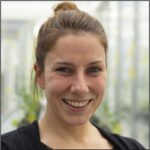 Charlotte Gommers is an Assistant Professor in Plant Physiology at Wageningen University since 2019. She got her PhD at Utrecht University in 2016, where she studied the shade avoidance syndrome in sun-loving vs. shade tolerant species under the supervision of Ronald Pierik. As a postdoc in the lab of Elena Monte at the Center for Research in Agricultural Genomics (CRAG) in Barcelona she got fascinated with plastid-derived retrograde signals, which antagonize light-steered development. Her team in Wageningen now studies the impact of the environment (light, darkness, abiotic stress) on plastid physiology and retrograde signaling, which ultimately drives developmental plasticity. Together with her colleagues, she contributed an update to the focus collection, reviewing the current understanding of etioplast-to-chloroplast development, which requires coordinated signaling from both plastid and nucleus and marks the beginning of a photoautotrophic lifestyle. See “Turning over a green leaf: integrating light signals toward chloroplast establishment.”
Johannes Kromdijk: Energy supply management in maize
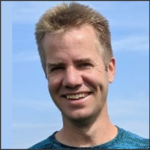 Johannes Kromdijk is a Professor in Environmental Plant Physiology at the University of Cambridge. Growing up in an area of The Netherlands with an abundance of glasshouses, Johannes became interested in plants at an early age. He obtained his BSc and MSc in Plant Sciences at Wageningen University (NL) and his PhD from the University of Cambridge (UK), where he studied the effects of light limitation on the efficiency of the carbon concentrating mechanism in C4 photosynthesis. Following postdoctoral stints at WUR Greenhouse horticulture and University of Illinois, Johannes returned to Cambridge in 2018 as a research group leader at the Department of Plant Sciences and a fellow at Pembroke College. Johannes is a UKRI Future Leaders Fellow and recipient of the SEB President’s medal in 2020. His research group employs a range of techniques from ecophysiology, mathematical modelling, biotechnology and genetic engineering to study plant physiology at the nexus of basic understanding of plant function and applications to improve sustainability and food security. His group contributed a research article to the focus collection, “Sub-optimal temperature leads to tighter coupling between photosynthetic electron transport and CO2 assimilation under fluctuating light in maize.”
Bruce Bugbee: Far-red photons and photosynthesis
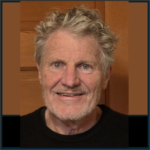 Bruce Bugbee is a Professor of Crop Physiology at Utah State University. His research has used both single leaf and whole canopy gas exchange technology to study plant response to spectral quality. This work led to the discovery of the value of far-red photons on photosynthesis and quantum yield in plant communities. He has worked closely with NASA to model crop yield and water use in controlled environments. In 2012 he was awarded the Governors Medal for Science from the State of Utah. He once summarized everything he knows in a TED talk titled, “Turning Water into Food.” He co-authored a review article “Extending the range of photosynthetic photons: the significance of far-red photons for photosynthesis” in this focus collection.
HOST
Ronald Pierik, Plant Physiology Associate Editor
 Ronald Pierik studies plant phenotypic plasticity in response to environmental changes. He researches photoreceptor-mediated signaling cascades in controlling shade avoidance responses to neighbouring plants, with an emphasis on light – hormone interactions. His work identified novel, photoreceptor-independent plant neighbour detection systems that operate through mechanostimulation and volatile organic compounds. Much of Ronald’s work integrates insights at the molecular and physiological level with whole plant performance during competition for resources.
MODERATOR
Lisa Oskam, Plant Physiology Assistant Features Editor
 Lisa Oskam received her training at the University of Amsterdam, where she did her Bachelor and Masters in biology. She continued her training at Utrecht University, where she received her PhD training in the photobiology group led by Ronald Pierik. She has been working as a postdoctoral researcher at Wageningen University, studying developmental plasticity in response to light quality.