Plant Physiology Webinar: Focus on Algae and Aquatic Plants
Celebrating the 2026 Focus Collection on Algae and Aquatic Plants
Recorded September 24, 2026
About this webinar
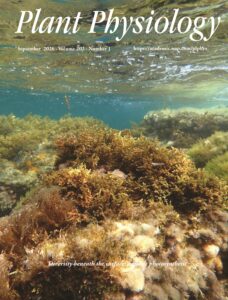 Aquatic photosynthetic species are critical contributors to the carbon cycle and maintenance of the global biosphere. Many have evolved specialized processes to cope with resource limitations in their environments, which are still not fully understood. Recent advances in genetics, omics and engineering biology approaches are providing tools to develop a deeper mechanistic appreciation of these fascinating species and to exploit their biology for biotechnology applications.
This focus collection, edited by Laura Gunn, Ben Long, Yusuke Matsuda, Alistair McCormick, and Douglas Orr, includes research articles on photosynthetic organisms found in aquatic or semi-aquatic environments, including fresh water and marine species, such as cyanobacteria, diatoms, algae (micro and macro), bryophytes (e.g., hornworts) and aquatic plants (e.g., sea grasses). Key topics for this issue include: the specialized CO2-concentrating mechanisms (CCMs) that allow for active acquisition of CO2 from the environment to improve the efficiency of CO2 assimilation by Rubisco; adaptations of the light- and carbon-dependent reactions of photosynthesis; co-ordination between photosynthesis and respiration; efforts to engineer components from aquatic species into crop plants to enhance yield potential, and technologies that enable mechanistic studies in these organisms.
SPEAKERS
James Moroney: Carbonic anhydrases and carbon assimilation in plants, algae, and cyanobacteria
 James V. Moroney is a Professor Emeritus in the Department of Biological Sciences at Louisiana State University. He earned his PhD in Biochemistry, Cell and Molecular Biology at Cornell University under the direction of Richard E. McCarty. He then conducted postdoctoral research at Michigan State University with N.E. Tolbert before taking a faculty position at Louisiana State University. His broad research interest is how plants and algae acquire carbon dioxide during photosynthesis, with a focus on the CO2 concentrating mechanism of Chlamydomonas reinhardtii. This led to his work on the roles of carbonic anhydrases in CO2 assimilation and other biosynthetic pathways in both plants and algae. He contributed a review article titled, “Carbonic anhydrases in plants, algae, and cyanobacteria” to this issue.
Onyou Nam: Unlocking diatom biology: A versatile gene-editing toolkit for Thalassiosira pseudonana
 Onyou Nam is a Postdoctoral Research Fellow in the Department of Biology at the University of York, UK. He received his PhD in Life Science from Hanyang University in Korea. His research focuses on the molecular and cellular mechanisms that enable diatoms to fix CO2 efficiently, with a particular interest in the organization and function of the diatom pyrenoid. He combines molecular genetics, advanced fluorescence imaging, proteomics, and physiological approaches to identify and characterize proteins involved in diatom CO2-concentrating mechanisms. His work has contributed to elucidating the molecular architecture of the diatom pyrenoid and to developing genetic tools for investigating protein localization and function in the model diatom Thalassiosira pseudonana. His recent work, “A versatile tool for gene editing in the diatom Thalassiosira pseudonana,” describes a modular single-episome toolkit for fluorescent protein expression, CRISPR/Cas9 genome editing, and scarless endogenous protein tagging.
Daniel Ducat: Interrogating the function of the cyanobacterial carboxysome through the use of gas exchange technologies
 Danny Ducat is currently a Professor at Michigan State University in the MSU-DOE Plant Research Laboratory and the Biochemistry and Molecular Biology Department. His team is interested in understanding regulatory pathways of cyanobacterial photosynthetic metabolism, in particular, to determine how regulatory systems sense and respond to changes in cellular energy states. Long range goals for the research team are to contribute to the potential of cyanobacteria as an alternative biotechnology chassis, including through the potential use of cyanobacteria in engineered microbial communities. Danny and his colleagues contributed an article titled, “Gas exchange measurements of carboxysome mutants reveal insights into cyanobacterial carbon-concentrating mechanisms” to this focus collection.
HOST
Alistair McCormick, Plant Physiology Monitoring Editor
 Alistair McCormick is a Professor of Plant Engineering Biology at the University of Edinburgh. His research interests have centred around the study of photosynthesis in plants, algae and cyanobacteria and how it can be manipulated to produce novel products or improve productivity. His group has a keen interest in the biology of CO2-concentrating mechanisms (CCMs) and has driven key advances in the molecular understanding of pyrenoid-based CCMs and engineering functional pyrenoid-based CCMs into land plants.
MODERATOR
Mireia Uranga Ruiz de Eguino, Plant Physiology Assistant Features Editor
 Mireia is a “Juan de la Cierva” Postdoctoral Fellow at the Institute for Integrative Systems Biology (I2SysBio, Valencia, Spain). During her PhD at IBMCP, Spain, she engineered plant viral vectors for CRISPR-Cas genome editing in model plants and Solanaceae crops. She has conducted postdocs in Belgium (VIB-PSB, and KU Leuven as a MSCA fellow) and Spain (CRAG), focused on genome editing and plant virology. Currently, she studies the genetic regulation of trichome development in cannabis and its role in the accumulation of therapeutic compounds. She has a deep passion for wet lab and SciComm, and she is excited to contribute to advances in plant science that could be applied towards future agriculture.