Celebrating the 2026 Focus Collection on Phylogenomics
Thursday December 3, 2026
7:00 AM PST | 10:00 AM EST | 3:00 PM GMT | 4:00 PM CET

About this webinar
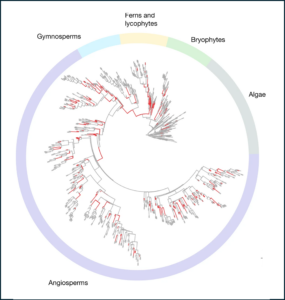 The increasing number of full-length genome sequences allows us to understand plant evolution via comparative genome analysis and the interpretation of proteins and other regulatory components encoded by these genomes. Phylogenomic analyses are leveraging our growing understanding of relationships among plant lineages to investigate the evolution of genome content and gene structure and function through phylogenetically-informed comparative analyses. At the cutting edge, this work is allowing researchers to frame experimental studies to test hypotheses about the genetic and molecular basis for phenotypic innovations in plant evolution.
The editors of the focus collection have invited four authors whose work appears in the focus collection to briefly describe their work, followed by a discussion of the future and utility of phylogeny-informed comparative genomics.
Host: Jim Leebens-Mack
 Jim Leebens-Mack is a professor in the Department of Plant Biology at the University of Georgia. He received his PhD in Plant Evolutionary Biology at the University of Texas and was a postdoc at Vanderbilt University. His research is focused on using phylogenomic approaches to explore the ecological, genomic, molecular, and developmental processes that contribute to phenotypic diversification and speciation in flowering plants. Much of his work focuses on the evolution of plant reproductive characters including unisexual flowers and sex chromosomes. Dr. Leebens-Mack is currently leading the DOE/JGI sponsored Open Green Genomes Initiative and developing empirical and analytical tools for phylogenetically grounded comparative genomics analysis.
Panelists
Mariana Artur
 Mariana Silva Artur is an Assistant Professor at the Laboratory of Plant Physiology, Wageningen University & Research (WUR), The Netherlands, where she leads the Desiccation Tolerance & Seed Maturation group. After completing her PhD at WUR in 2019 on the evolution, structure and function of LEA proteins in seeds and resurrection plants, she pursued postdoctoral research at Utrecht University, studying drought responses in tomato roots, and at WUR through the Seeds for the Future Initiative, bridging fundamental and applied seed research. Her research combines evolutionary genomics, seed physiology, and molecular biology to understand the evolution and regulation of desiccation tolerance during seed maturation. Her recent work uses phylotranscriptomics to explore the evolutionary dynamics of gene expression throughout the seed life cycle. Her group’s contribution to the focus collection is, “The phylotranscriptomic profile of angiosperm seed development follows a reverse hourglass pattern“.
Pierre-Marc Delaux
 Pierre-Marc Delaux is a Project leader at LRSV-CNRS, University of Toulouse, France. His research aims at understanding the evolution of the molecular mechanisms controlling beneficial associations between plants and microbes, with a particular focus on the arbuscular mycorrhizal (AM) and nitrogen-fixing root nodule (RN) symbioses. A combination of phylogenetics, genetics in a large variety of land plants and metabolomics is used to reconstruct the evolutionary trajectories of gene networks controlling nutrient exchanges during AM. In parallel, comparative phylogenomic approaches and the development of novel model plants have been initiated to elucidate the origin of the RN symbiosis. His group contributed an article titled “Mechanisms, detection, and impact of horizontal gene transfer in plant functional evolution” to this focus collection.
Jan de Vries
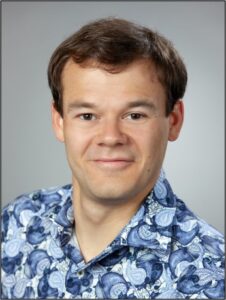 Jan de Vries is a professor in the Department of Applied Bioinformatics at the Institute of Microbiology and Genetics, University of Göttingen . He received his PhD from Heinrich-Heine-Universität Düsseldorf and completed a postdoc at Dalhousie University, Canada as a DFG Fellow before returning to Germany as a faculty member at the University of Göttingen. His research centers on understanding how plants adapted to live on land through the applications of phylogenomics to study Streptophyte algae, the closest extant relatives to terrestrial plants. His group contributed an article called, “The Spirogyra pratensis genome illuminates the evolution of developmental programs and spiral chloroplast biology” to the focus collection.
Facundo Romani
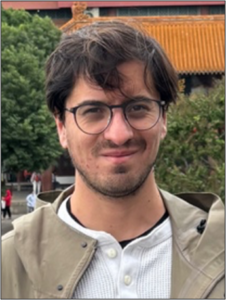 Facundo Romani is a Broodbank Fellow at the University of Cambridge. Born in Argentina, he earned his Biotechnology degree from the National University of Quilmes and later moved to Universidad Nacional del Litoral to pursue a PhD. There he specialised in plant molecular biology. His research focuses on understanding the molecular mechanisms driving plant development. During his PhD, he used the liverwort Marchantia polymorpha as a model system to study development evolution under the guidance of Professor John Bowman in Australia. Since 2021, he has been part of the Department of Plant Sciences at the University of Cambridge (UK). In 2023, he obtained the Leverhulme Early Career Fellowship and in 2026 the Broodbank Fellowship. Working alongside Professor Jim Haseloff, he began investigating gene regulation to control growth and differentiation in Marchantia, aiming to establish it as a model system for evo-devo and synthetic biology. Their recent research explores the evolution and diversification of the cell cycle control system in plants and how Marchantia offers a simplified version of it. His work in this focus collection is “A simple cell-cycle control system in Marchantia polymorpha provides a framework for understanding plant cell proliferation”.