ASPB Webinar – Watching Roots Break Through: 3D Phenotyping of Root System Penetrability in Compacted Soils
Featuring Elohim Bello Bello and Camaron Lemmer
When: Thursday, December 10, 2026, at
7:00 AM PST | 10:00 AM EST | 3:00 PM GMT | 11:00 PM Beijing

Soil compaction is a growing driver of global land degradation and a major challenge for modern agriculture. Compacted subsoil layers block roots from reaching deeper water and nutrients, yet screening plants for the ability to punch through those layers has remained low-throughput, destructive, and largely manual. This webinar introduces RootXplorer, a computer vision-based 3D phenotyping platform built to remove that bottleneck.
Recently published in Plant Phenomics, RootXplorer combines three components: a two-layer Phytagel cylinder system that reproduces the mechanical impedance of a hardpan, the RADICYL 3D imaging unit that captures 72 images per plant at 5-degree intervals, and an automated U-Net++ deep learning pipeline that segments roots and extracts penetration traits/phenotypes. The platform quantifies whole-root-system penetrability – not just the primary root – and can process 300 cylinders in under four hours.
The talk will cover how the platform was validated across four species (Arabidopsis, soybean, sorghum, and rice), what diversity screens of 20 accessions per species revealed about species-specific strategies for overcoming mechanical impedance, and how time-lapse imaging exposed the distinct roles of lateral, seminal, and crown roots in penetrating hard layers. It will also cover the cross-validation step in which gel-based phenotypes were confirmed in real compacted soil columns using X-ray micro-computed tomography.
Who should attend: plant scientists, root biologists, breeders, phenotyping facility staff, and ag-tech researchers interested in high-throughput imaging, computer vision, and root architecture under abiotic stress.
Organized by ASPB’s Western Section
Panelists
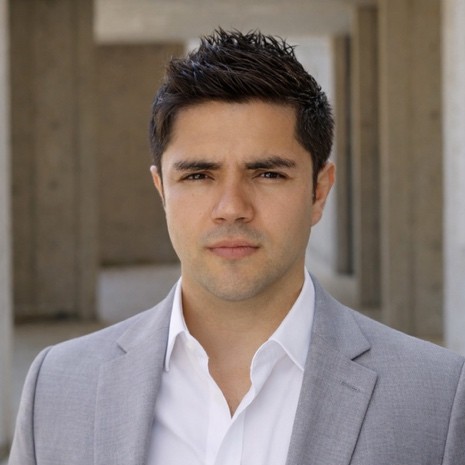
Elohim Bello Bello
Dr. Elohim Bello Bello is [a Postdoctoral Researcher] in the laboratory of Wolfgang Busch at the Salk Institute for Biological Studies, where his work is part of the Harnessing Plants Initiative. He is the first author of the RootXplorer paper in Plant Phenomics and led the design of the Phytagel cylinder system and the root penetration trait framework behind it. His research lies at the intersection of root biology, genetics, genomics, transcriptomics, and high-throughput phenomics and aims to uncover the molecular and physiological basis of natural variation in root soil penetration and to develop phenotyping approaches for identifying genotypes able to root deeply in compacted and marginal soils. Dr. Bello earned his Ph.D. in Plant Biotechnology in 2022 from the Advanced Genomics Unit (UGA-LANGEBIO) at CINVESTAV, Mexico. He is a Lindau Nobel Alumnus and recipient of the Salk Career Development Award 2025. Learn more here: https://www.linkedin.com/in/elohim-bello-838ab31ab.

Camaron Lemmer
Camaron Lemmer is a Product Manager and American Society of Nondestructive Testing (ASNT) Level 3 at North Star Imaging, based in Rogers, Minnesota. His experience in testing technologies includes 2D Digital Radiography (DR), 3D Computed Tomography (CT), Computed Radiography, Film Radiography, Linear Accelerators, Robotic Inspection Systems, and other advanced inspection methodologies. His work and research as an innovator have led to patents in radiography, and advancing American Society of Testing Materials (ASTM) standards used across many industries.
North Star Imaging designs and manufactures X-ray and computed tomography systems for non-destructive testing and 3D imaging. The NSI X5000 micro-CT system was used in the RootXplorer study to image root system architecture in situ within intact soil columns, confirming that penetration phenotypes measured in the gel-based platform hold in real compacted soil. More information: 4nsi.com.
_____________________________________________
