Celebrating the 2026 Focus Collection on Plant Ecophysiology
Recorded Thursday February 26, 2026 at
ABOUT THIS WEBINAR
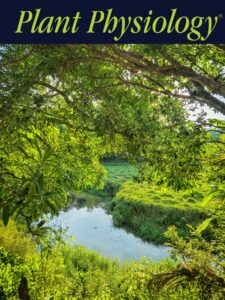 A recent issue of Plant Physiology, edited by Wagner L. Araújo, Florian Busch, Tracy Lawson, Christine Scoffoni, Xinguang Zhu, and Agustin Zsögön, has a focus on plant ecophysiology.
Plant ecophysiology is an experimental science that deals with how plants respond to their physical, chemical, and biological environment. It also attempts to understand how plant responses are scaled up from the individual to the community. With the accelerated change in global climate patterns, recent years have witnessed tremendous progress in understanding plant function from an ecophysiological viewpoint. Ecophysiological studies have significantly enhanced our understanding of photosynthesis, respiration, water relations, plant nutrition, and plant responses to abiotic and biotic stresses.
This Focus Collection brings together current mechanistic insights into fundamental ecophysiological questions by combining advanced and emerging approaches related to the study of plant function in general. A deeper understanding of plant ecophysiology may provide ecological and evolutionary insights to understand plant responses to stress, predict ecosystems responses to global change, and improve crop yields.
This webinar features speakers Amanda Cardoso, Thomas Williams, and Sabina Villadangos, who share findings from their work appearing in this Focus Collection. The webinar is hosted by Plant Physiology editor Agustin Zsögön and is moderated by Plant Physiology Assistant Features Editor Thomas Depaepe.
SPEAKERS
Amanda Cardoso. Plant hydraulic traits influencing crop production under water-limited conditions
 Amanda Cardoso received her MS and PhD degrees from the Universidade Federal de Viçosa (Brazil). She conducted her doctoral research on stomatal and xylem responses to soil and atmospheric drought in the laboratory of Tim Brodribb at the University of Tasmania (Australia). Her postdoctoral work in the laboratory of Scott McAdam at Purdue University (USA) targeted the evolution of stomatal responses to abscisic acid and the legacies of drought-induced xylem embolism to plant function. Amanda is currently an assistant professor of crop physiology at North Carolina State University. Her studies focus on identifying climate-resilient crops, uncovering structural and functional resilience mechanisms, and generating knowledge on best management practices for plant production under challenging climates. She recently received the Goodnight Early Career Innovators Award in recognition of her contributions to STEM research and education at NC State University. Amanda and her colleagues contributed a review article to this issue, “Plant hydraulic traits influencing crop production in water-limited environments.”
Thomas Williams. Genome-scale metabolic models in plant physiology: Reserve metabolism and future climate resilience
 Thomas Williams did his degree in Molecular and Cellular Biochemistry and DPhil in Plant Sciences at the University of Oxford under the supervision of George Ratcliffe and Lee Sweetlove. His DPhil was focused on carbon13 based metabolic flux analysis of the plant TCA cycle and the validation of constraints-based modelling techniques. In 2010 he moved to the Federal University of Viçosa in Brazil as a visiting lecturer where he worked with Marcelo Loureiro and Adriano Nunes-Nesi on sucrose metabolism in guard cells and algal biotechnology. In 2012 he took up a facu”lty position in the Botany Department at the University of Brasília where he began using genome scale models to predict how the plant metabolic network responds to different demands and stresses. Recent work has focused on the impacts of seed reserve composition on metabolism during seedling growth, and how both crops and native Brazilian tree species adjust to drought and flooding stress. Thomas and colleagues contributed a review article to this collection, “Genome-scale metabolic models in plant stress physiology: implications for future climate resilience.”
Sabina Villadangos. A quiescent-like strategy underlies extreme stress tolerance and clonal offset maintenance during drought in Sempervivum tectorum
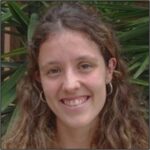 Sabina Villadangos obtained her BSc in Biochemistry from the Autonomous University of Madrid in 2019. She performed her PhD in Ecology, Environmental Sciences and Plant Physiology at the University of Barcelona under the supervision of Prof. Sergi Munné-Bosch, receiving her doctoral degree in 2025. Her PhD research focused on the acclimation mechanisms to extreme drought in stress-tolerant plant species. She is currently developing Plant Ecophysiology research lines within the PLANTsynergy group, led by Prof. Sergi Munné-Bosch. Her recent work encompasses two main research lines: “Stress acclimation in extreme environments”, by studying hormonal responses to abiotic stress in contrasting species such as Sempervivum tectorum, Iris pseudacorus and Posidonia oceanica; and “Algae in the conservation of biodiversity and biotechnological applications”, focusing on the ecophysiology of invasive algae and on exploring the potential of algae- and invasive-plant-based biostimulants. Sabina and Sergi Munné-Bosch contributed a research article to this collection, “A quiescent-like strategy underlies extreme stress tolerance and clonal offset maintenance during drought in Sempervivum tectorum.”
HOST
Augustin Zsögön, Plant Physiology Guest Editor
 Agustin Zsögön received his PhD from the Australian National University in 2012. He is currently Associate Professor of Molecular Plant Physiology at the Universidade Federal de Viçosa. He conducts translational research that leverages fundamental knowledge to support agriculture and ensure food security. His focus is on gene discovery for de novo domestication of crop wild relatives that harbour valuable biotic and abiotic stress resistance genes using gene editing techniques.
MODERATOR
Thomas Depaepe, Plant Physiology Assistant Features Editor
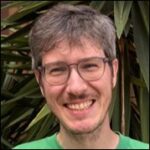 Thomas Depaepe holds a PhD in Biology from Ghent University, Belgium. His doctoral and postdoctoral work in Ghent under the supervision of Prof. Dominique Van Der Straeten focused on investigating the physiological roles of ethylene and other hormone-controlled mechanisms that regulate growth and abiotic stress adaptation in Arabidopsis. After completing his PhD, he moved to Spain with a MSCA postdoctoral fellowship to join the PlantSynergy group with prof. Sergi Munné-Bosch at the University of Barcelona, where he studied the molecular pathways underlying organelle communication under abiotic stress. He currently holds an Assistant Professor position at the same university, with research interests in organelle communication, combined abiotic stress, and hormone signaling.
I’m interested
Thanks for the invitation.