A webinar organized by ASPB’s Women in Plant Biology Committee
April 9, 2026
2 PM Eastern time
Are you considering a future in academia, but unsure which path is right for you? Join us for an engaging webinar featuring plant scientists from both primarily undergraduate institution (PUI) and a research-intensive university (R1) to share practical, real-world insights into building a productive and fulfilling academic career. Our speakers will discuss navigating the academic job market, establishing research programs, balancing teaching and scholarship, obtaining funding, mentoring students, and sustaining long-term career success. You’ll hear first hand perspectives of opportunities and challenges unique to the two different academic environments.
Whether you are a graduate student, postdoc, or early-career scientist, this webinar will help you better understand what it takes to thrive in different academic settings—and how to chart your own path with purpose.
Organized by ASPB’s Women in Plant Biology Committee
Panelists

Amanda Storm
Dr. Amanda Storm is an Associate Professor of Biology at Western Carolina University, a regional comprehensive university that is also a primarily undergraduate institution (PUI). She completed her B.S. in Chemistry at Central State University before joining the lab of Dr. Carol Dabney-Smith at Miami University where her Biochemistry doctoral work focused on the structural and functional study of the thylakoid Twin Arginine transport (cpTat) system. Her subsequent postdoctoral work expanded on the study of plant protein structures with Dr. Jonathan Monroe at James Madison University where she explored the structural and regulatory differences of proteins within the β-amylase family, contributing to the understanding of chloroplast starch degradation. At WCU, Dr. Storm has continued studying the β-amylase family and applied similar techniques to the study of proteins in other systems, including uncharacterized proteins in cotton and bacteria. Since joining WCU, Dr. Storm has mentored high school, undergraduate and master’s students in research, with most continuing on to graduate programs or careers in biotechnology. She has served on the ASPB Early Career Plant Scientists (ECPS) Section Committee and as an elected member of the Steering Committees for the Primarily Undergraduate Institution (PUI) Section and the Southern Regional Section. She has also helped organize career networking and professional development workshops at the national and regional ASPB meetings. Learn more about Dr. Storm: https://www.wcu.edu/faculty/arstorm.aspx.
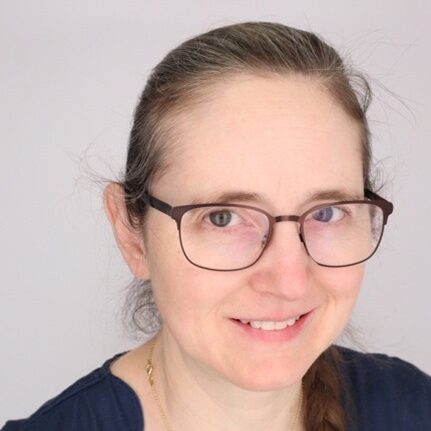
Adrienne Roeder
Dr. Adrienne Roeder is a Professor in the Weill Institute for Cell and Molecular Biology and the School of Integrative Plant Sciences, Section of Plant Biology at Cornell University. She earned her B.S. in Biological Sciences with a minor in Mathematical and Computational Sciences from Stanford University in 1999. She earned her PhD from UCSD working with Martin Yanofsky in 2005. She completed a postdoctoral fellowship at Caltech with Elliot Meyerowitz before starting her own lab studying Arabidopsis sepal morphogenesis using a computational morphodynamics approach combining live imaging, image processing, and computational modeling. She has a longstanding interest in plant cell and developmental biology. Her lab studies how cell size and organ size are regulated in plants. Specifically, her group studies how plants generate cells with diverse sizes, ranging from giant to small, through regulating endoreduplication. On the flip side, her group also studies how plants form organs, such as sepals, with reproducible size despite variability of cells in their size, growth, and division. Her lab has an interest how organ size and shape emerge from the coordination of cell growth. Strikingly, her lab is finding that plants utilize stochasticity or randomness to produce robustness and regularity. Roedar Lab: https://roeder.wicmb.cornell.edu/.
_____________________________________________
Moderator
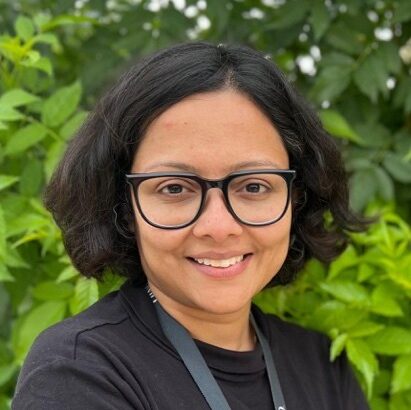
Thiya Mukherjee
Dr. Thiya Mukherjee is an Assistant Professor in the Division of Biology, Department of Natural Sciences at Texas A&M University-San Antonio. Trained in plant developmental biology and biochemistry, her research focuses on metabolic regulation of plant development to advance sustainable crop improvement. She earned her Ph.D. at Texas Tech University in the laboratory of Scott Holaday, where she developed strategies to enhance cotton fiber development through manipulation of cellulose biosynthesis. She completed postdoctoral research at Kansas State University, investigating links between lipid metabolism and epidermal cell development, and later served as a Research Scientist at the Donald Danforth Plant Science Center, focusing on soybean seed metabolism and nutrient optimization. The Mukherjee lab now develops molecular and metabolic engineering strategies to improve yield, nutritional quality, and stress resilience in oilseed crops such as soybean and linseed (flax).
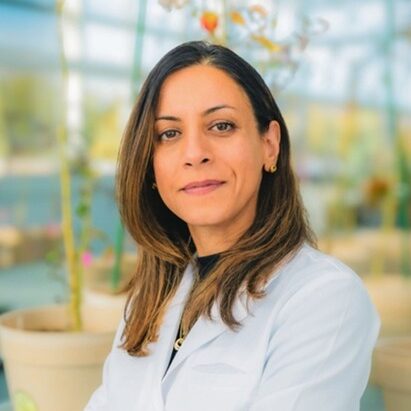
Azam Noori
Dr. Azam Noori is an Associate Professor of Biology at Merrimack College (MC), a primarily undergraduate institution (PUI). Her research focuses on the molecular and physiological mechanisms underlying plant responses to environmental contaminants, with the overarching goal of improving human and environmental health. She also investigates the anti-inflammatory and antioxidant properties of plant-derived specialized metabolites in cancer cells. At Merrimack College, she has developed and taught courses including Plant Biology, Plant Physiology, Natural Medicine, and Phytotechnology. She is deeply committed to mentoring undergraduate and graduate students in research, with a strong emphasis on preparing them for competitive careers and advanced studies. Her current NSF-funded research provides undergraduate students with meaningful, hands-on research experiences.
Dr. Noori has been actively involved with the American Society of Plant Biologists (ASPB), serving as an executive member in the Northeast section, Women in Plant Biology committee, and the PUI section. She currently serves as Vice President of the International Phytotechnology Society and as an Associate Editor of the Journal of Phytoremediation.

Malini Muthu Karpagam
Dr. Malini Muthu Karpagam is a plant physiologist who studies how trees respond to environmental stress. As a postdoctoral associate in the PLACE Lab at Smith College, she investigates poly-stress tolerance in native Northeastern conifers and examines how phloem function contributes to drought-induced tree mortality. She currently serves as an Early Career Representative on ASPB’s Women in Plant Biology Committee and is actively engaged in science communication and community engagement in plant science. X: @malini_muthuraj.
_____________________________________________

Thank you! This webinar provides excellent guidance for anyone considering an academic career, and it’s motivating to see diverse journeys leading to shared purpose in science.